You are here
The Challenge
Until now, the blood-brain barrier (BBB) has hampered the development of new therapies to treat diseases of the brain and central nervous system (CNS). The BBB serves as the natural guardian of the brain, keeping foreign substances out while permitting access only to certain metabolically essential molecules, such as glucose, insulin, and growth hormone.
Conveying therapeutics to the brain has been attempted in a number of ways, with varying degrees of success. One method,the pharmacological approach, is to modify a known active molecule to meet the criteria (size, charge, fat-solubility) necessary to penetrate the BBB. This may result in diminished activity, unwanted toxicity or inability to reach the target.
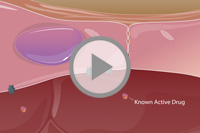 View an animation to see how the pharmacological approach works.
The physiological approach is the ideal therapeutic approach that harness the brain’s own active transport system, and gain entry across the BBB the same way other molecules such as growth hormone or insulin are carried into the brain. Angiochem has developed a platform technology that enables the development of drugs that do exactly this.
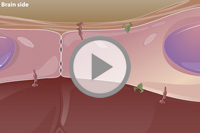 View an animation that shows how the physiological approach works.